Ice Cream Shoppe
A private Apple Notes archive turned into a public product showcasing my ice cream shop ratings and creations from my kitchen.
Context
Starting in 2020, I started documenting every ice cream shop I visited and rated the sweet treat I got from there. Sure, I enjoy a brewery as much as the next person, but ice cream is my thing. On every vacation, unique ice cream shops are sought out. Winter or summer, the hunt for the greatest ice cream is always on my mind. Adding even more fun to the party, as a wedding gift, I received an ice cream maker — thus starting a sub-list of my own creations that I've experimented with.
Challenge
Managing a quick list in the Notes app was easy until 10 became 30 and eventually over 150 listings. And this isn't just any listing; this is a highly non-scientific formula that accounts for taste, cost, whether it would be worth a return visit, and overall experience. I needed a way to connect my Notes with the photos in my camera roll. The Shoppe also needed a backend that allowed me to add new ratings and creations from my kitchen.
Insight
This required more than just making a visual spreadsheet; it needed to be a public, living recommendation engine that made sense of my unstructured data. Although this is a passion project, it's also a quality-built product that handles the yuck of searchable location mapping, consistent records, and data storage in the background, and focuses on the workflow from order counter to first lick.
Execution
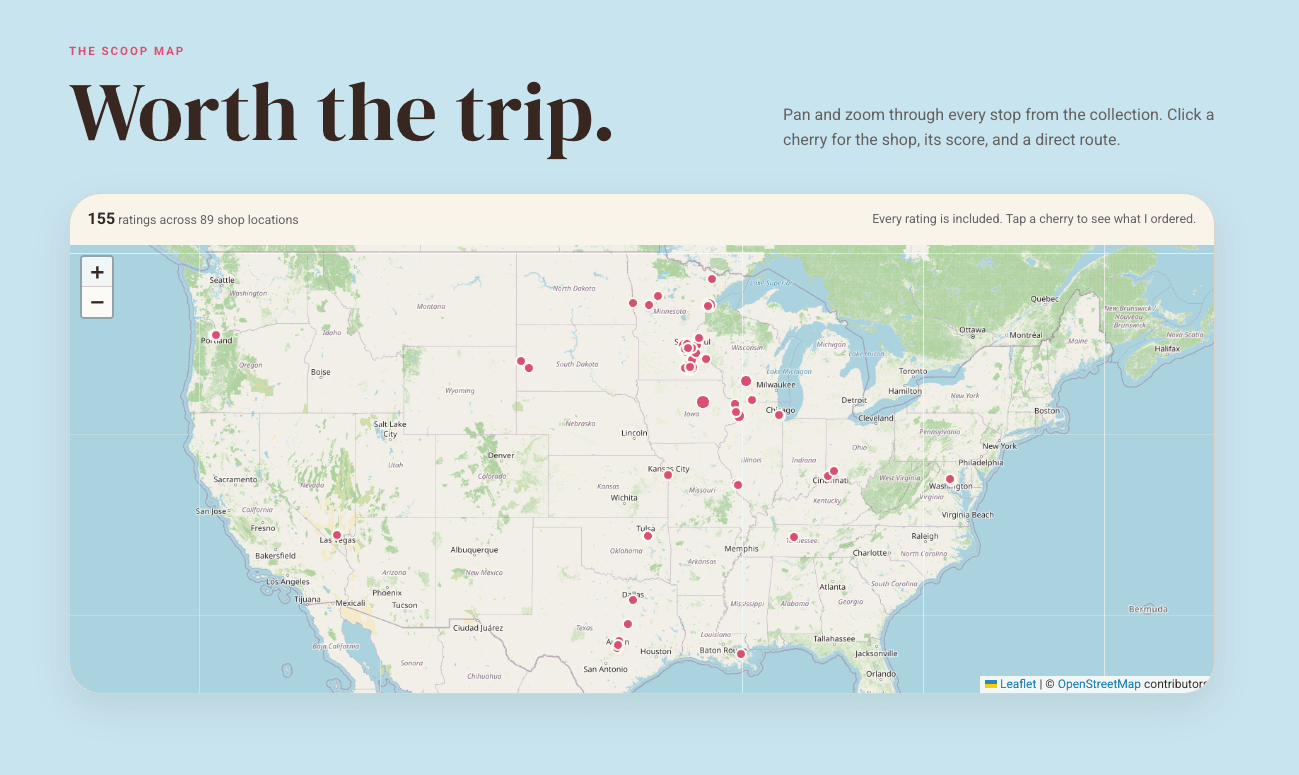
Created the Scoop Map so every recommendation has a useful storefront destination, with grouped markers, repeat-visit context, and a direct route when someone wants to follow the recommendation.
Moved 155 Apple Notes ratings and their original photos into a structured collection, normalizing repeat-shop aliases, dates, prices, and locations while retaining the personal details that make a recommendation useful.
Built the public ratings case with filter and sort-by pop-up views for quick, focused browsing — recent, top-ranked, or A–Z — plus full-image viewing and mobile-first tasting cards that make a large archive easy to consume.
Designed Behind the Counter, a private mobile-first workspace where I can capture a rating or homemade pint, attach photos, select an existing storefront or verify a new one, and save it as a draft or send it through review.
Connected the capture flow to protected image storage and structured submission data, with file checks, storefront confirmation, and review gates that keep incomplete or inaccurate entries off the public experience.
Work
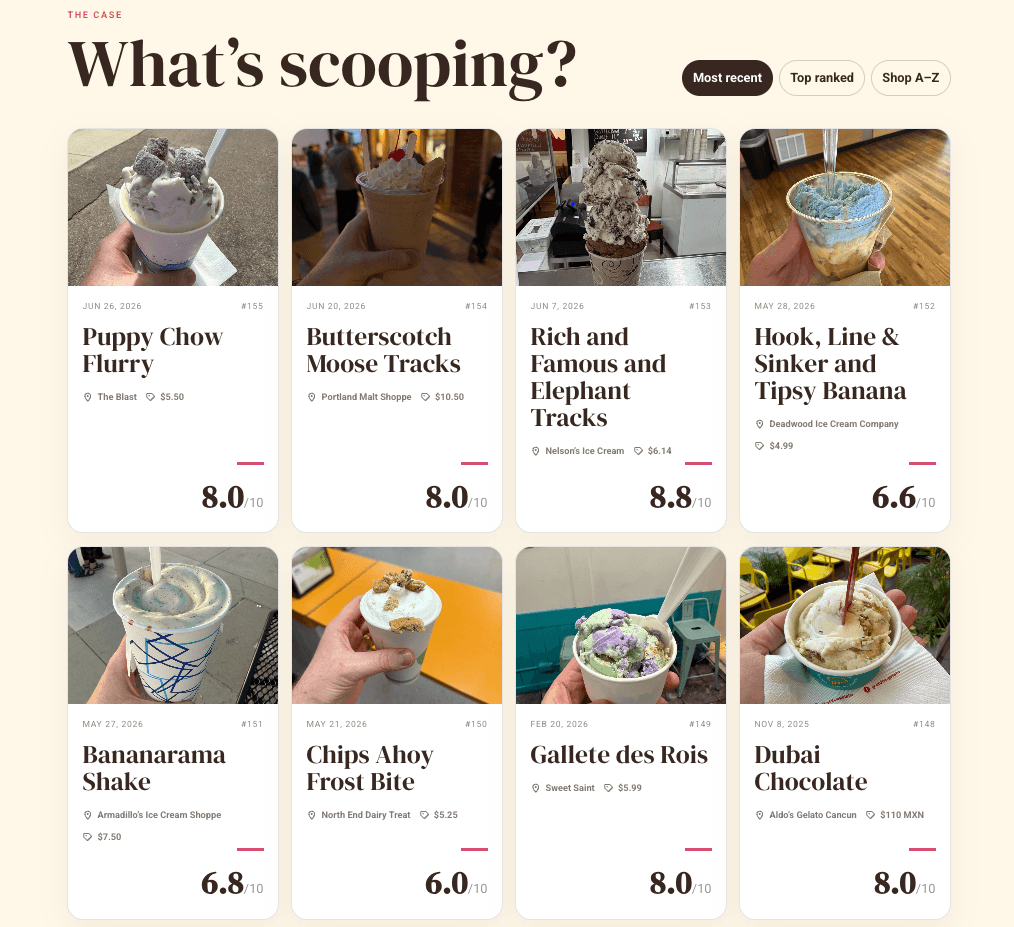
The public ratings case
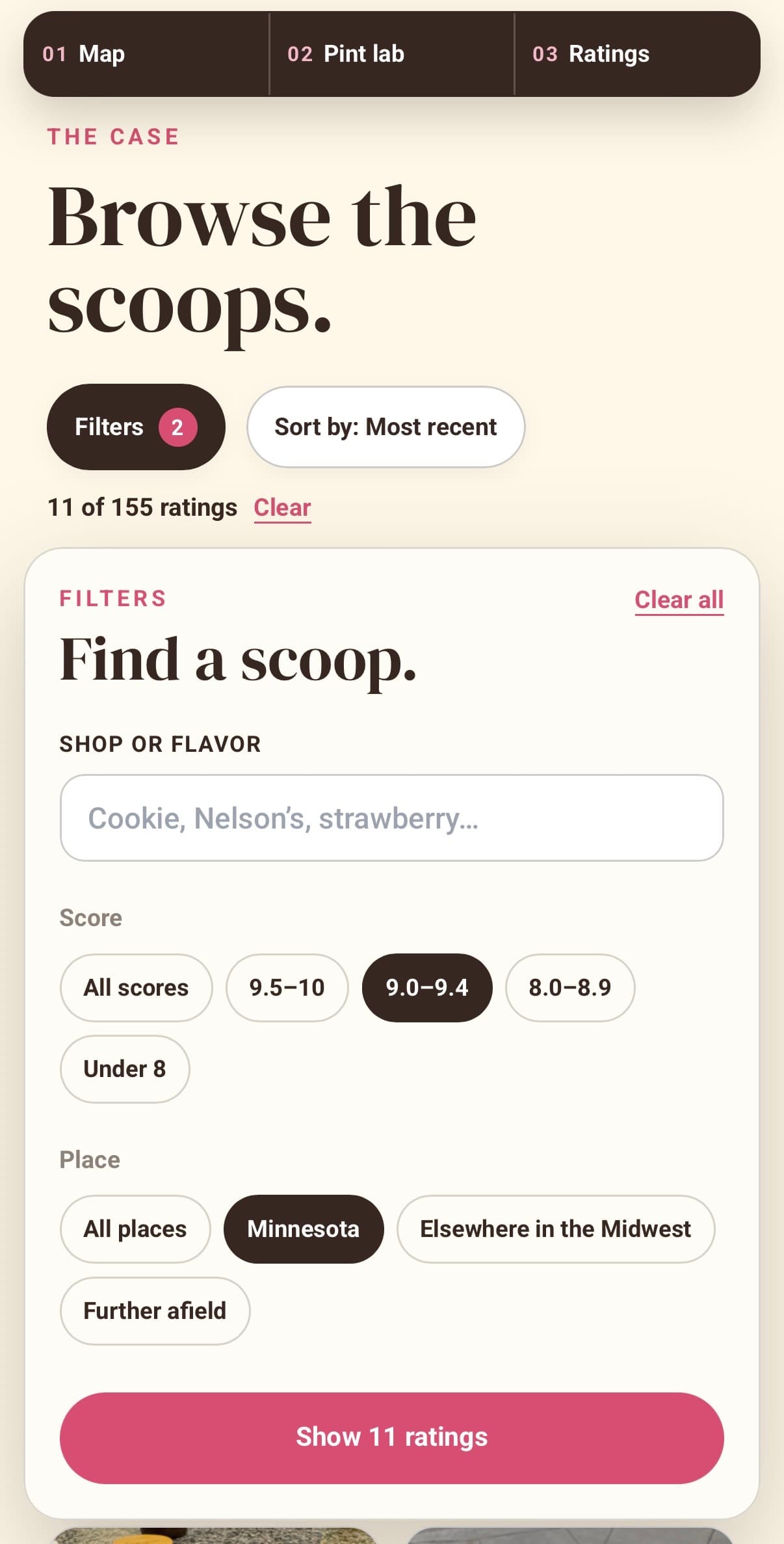
The mobile filter pop-up keeps shop, flavor, score, and place controls in one focused view — making it easy to narrow 155 ratings without interrupting the browse.
The sort control quickly reshapes the collection around a preference like Top ranked, surfacing the strongest scoops without burying the browsing experience.
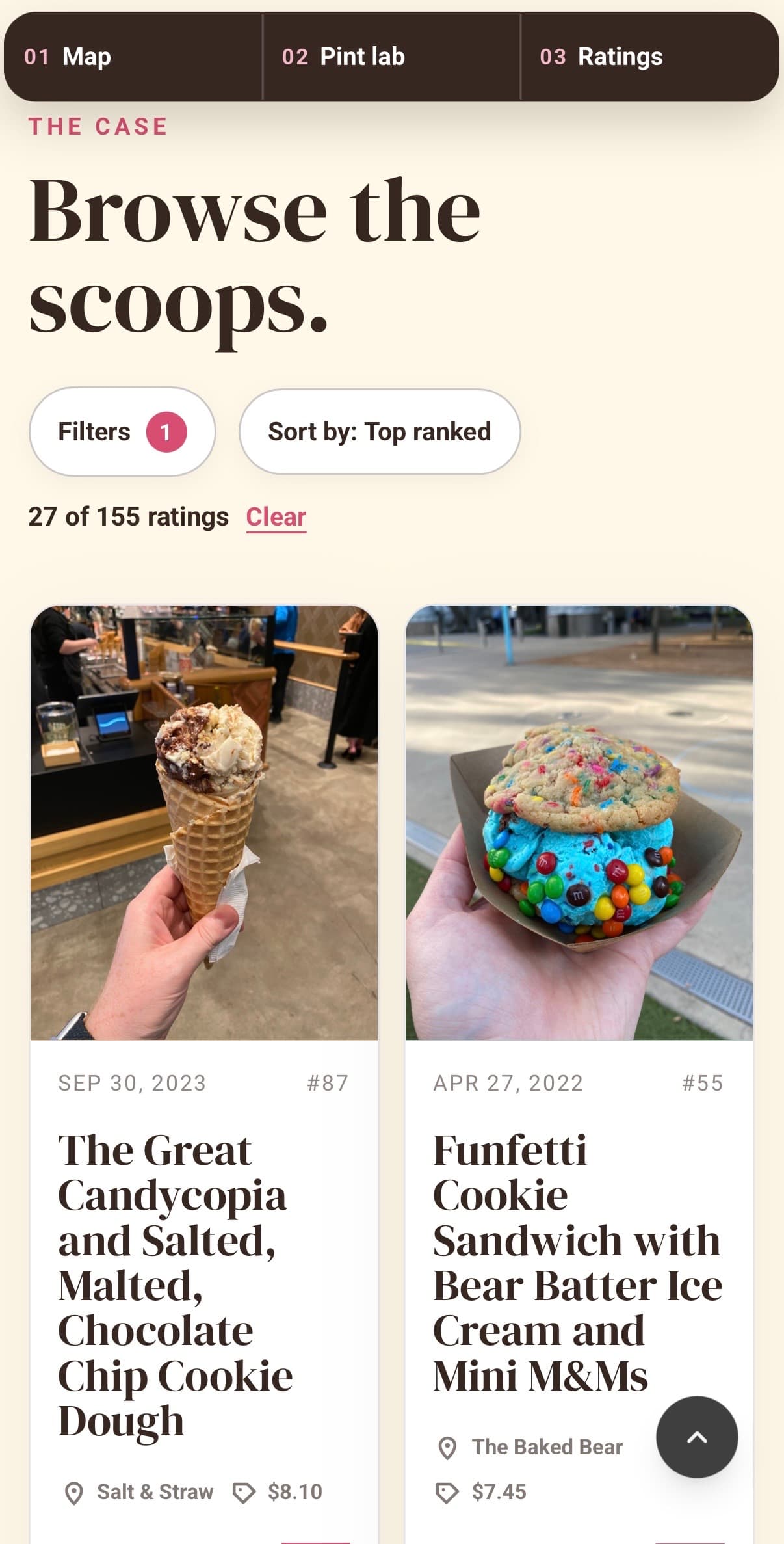
Behind the Counter
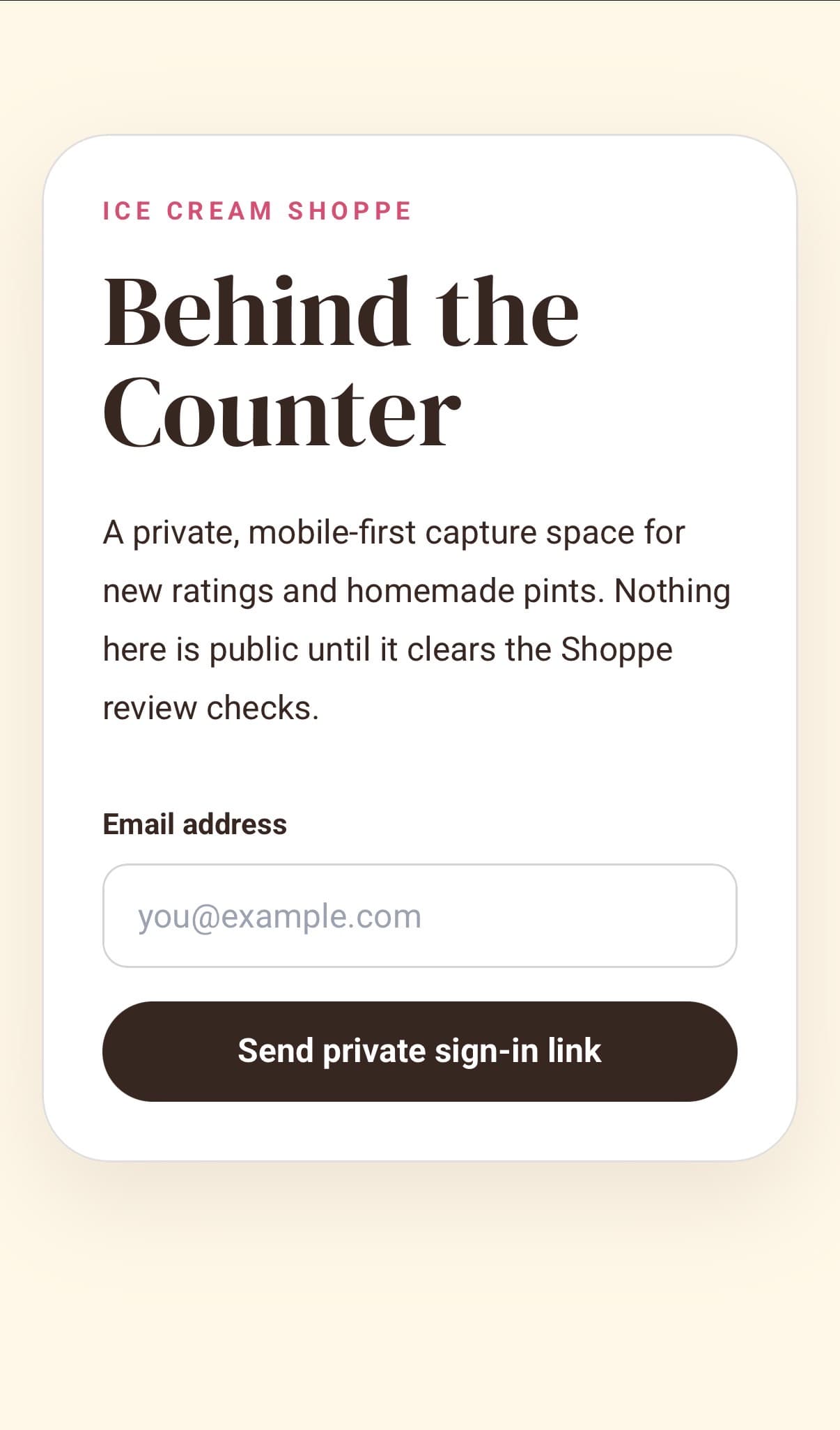
The private workspace starts behind an approved sign-in, keeping unfinished captures and the publishing system separate from the public Shoppe.
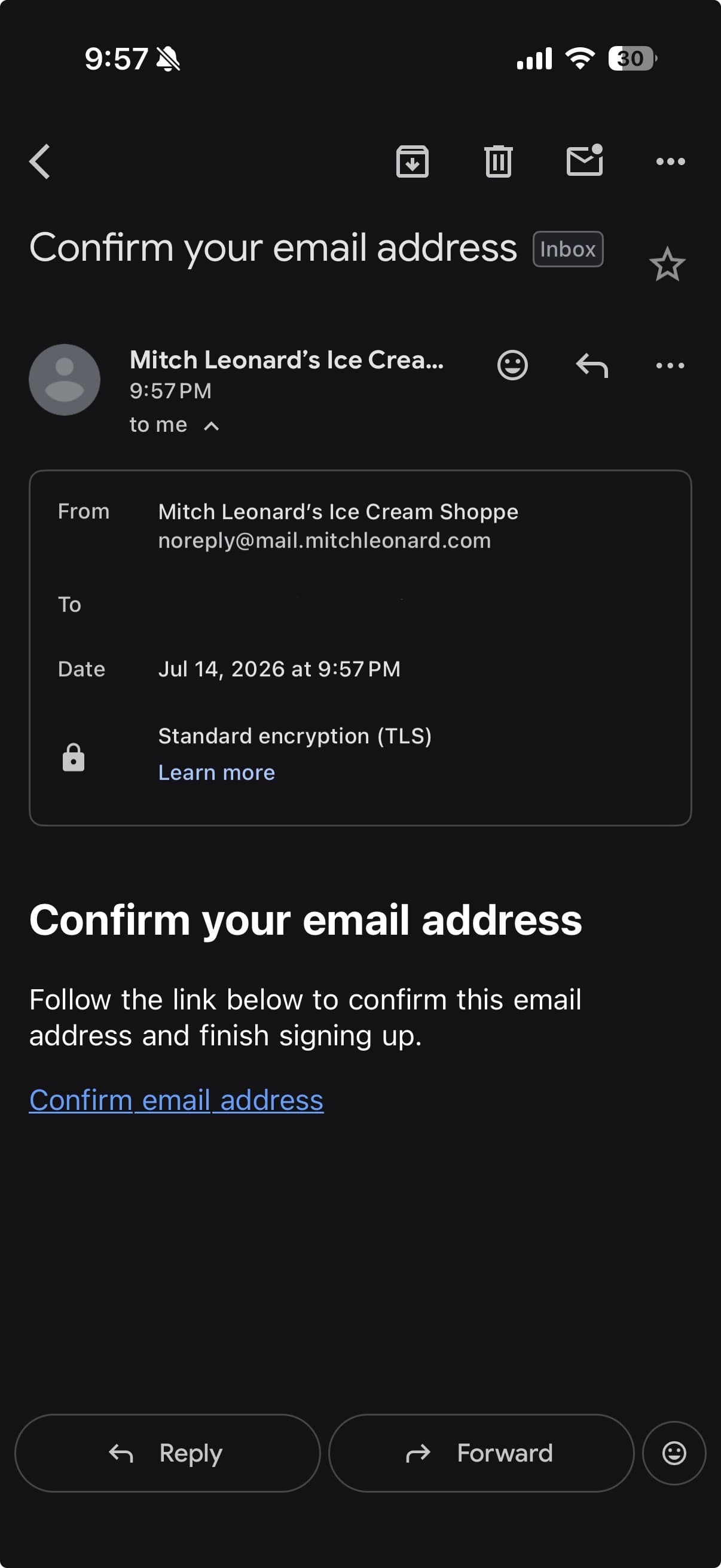
The passwordless magic link confirms the editor identity before the Counter opens — a small but important layer of protection around a personal publishing system.
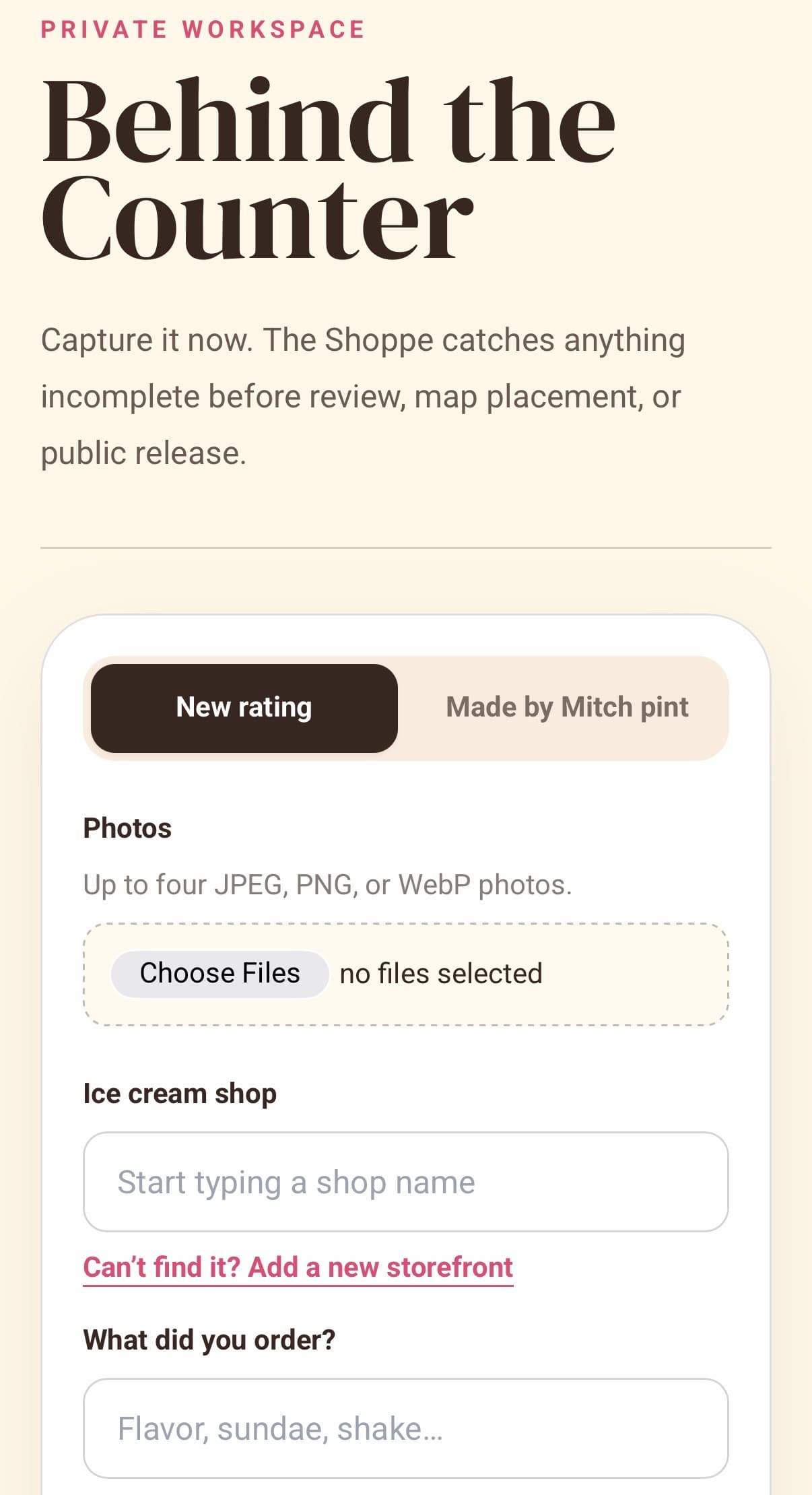
A new rating begins on a phone: photos, shop, item, score, date, and price. Existing storefronts can be selected, while new ones are verified before they can become a public map pin.
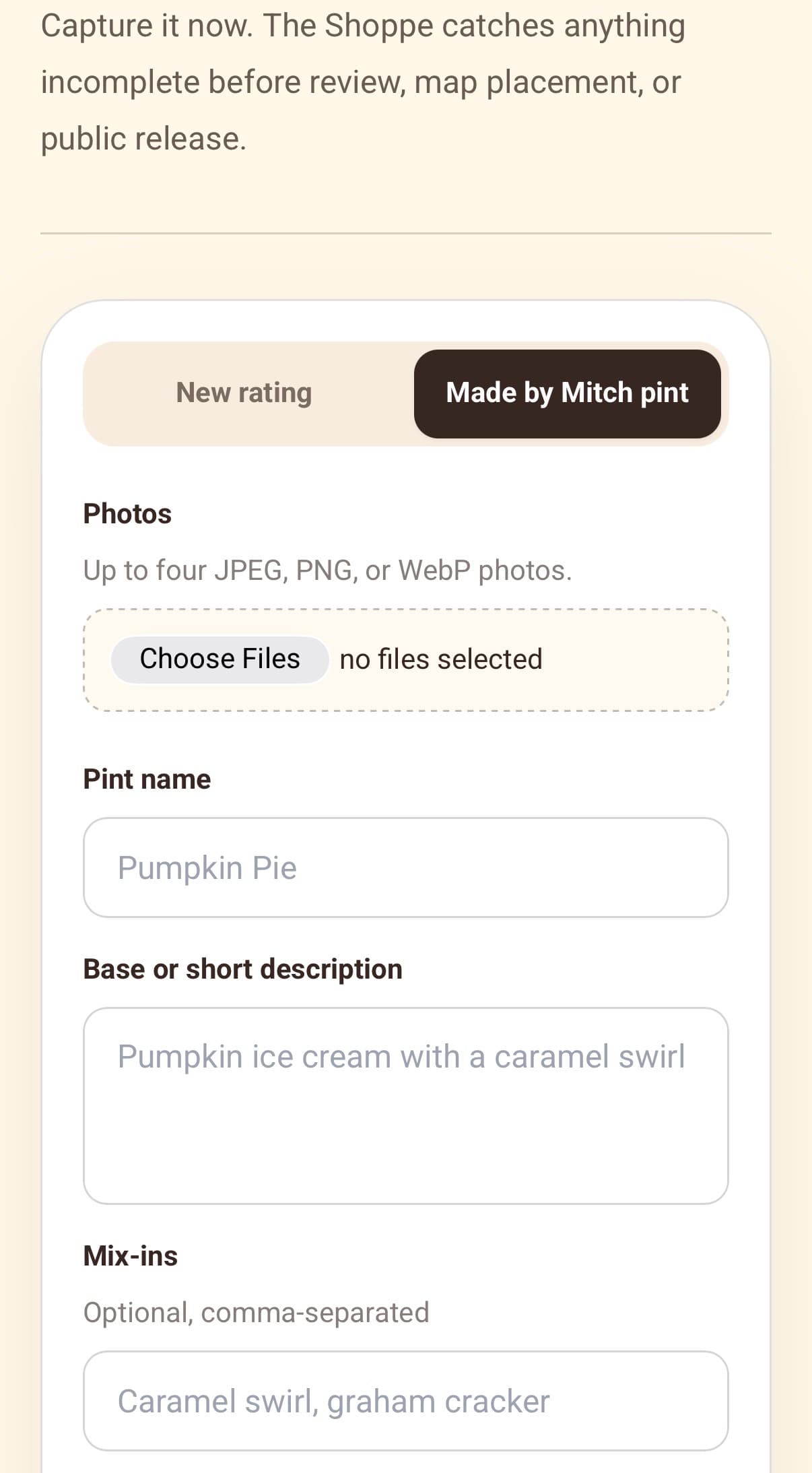
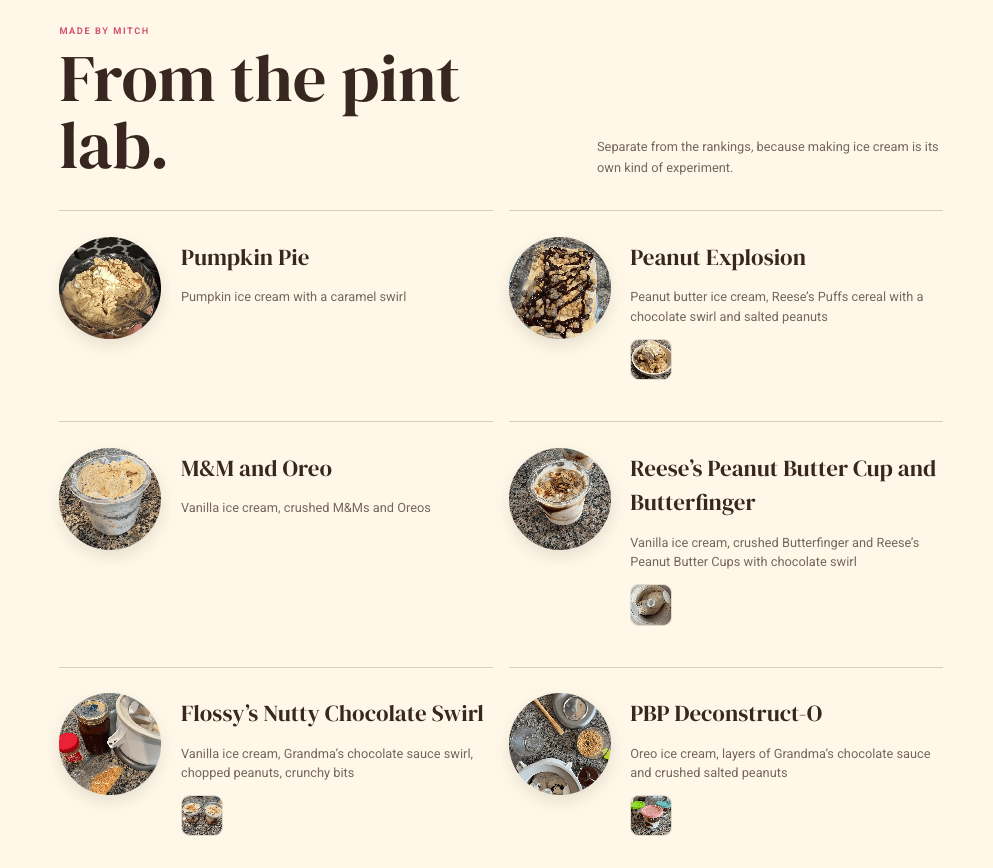
The same capture system supports Made by Mitch pints, storing the base, mix-ins, and photos as a separate collection rather than forcing every entry through the public rating model.
The public experience
Next case study